 THE INDIAN ARMED FORCES
Stories of Valour & Patriotism
THE INDIAN ARMED FORCES THE INDIAN ARMED FORCES
The Indian Armed Forces comprise of three divisions - Indian Army, Indian Navy, and the Indian Air Force. The Government of India is responsible for ensuring the defence of India and every part thereof. The Supreme Commander of the Indian Armed Forces is the President. The responsibility for national defence rests with the Cabinet. This is discharged through the Ministry of Defence, which provides the policy framework and wherewithal to the Armed Forces to discharge their responsibilities in the context of the defence of the country.
The Indian armed forces have been engaged in a number of major military operations, including: the Indo-Pakistani wars of 1947, 1965 and 1971, the Portuguese-Indian War, the Sino-Indian War, the 1967 Chola incident, the 1987 Sino-Indian skirmish, the Kargil War, and the Siachen conflict among others. India honours its armed forces and military personnel annually on Armed Forces Flag Day, 7 December.
Since 1962, the IAF has maintained close military relations with Russia, including cooperative development of programmes such as the Fifth Generation Fighter Aircraft (FGFA) and the Multirole Transport Aircraft (MTA). Armed with the nuclear triad, the Indian armed forces are steadily undergoing modernisation, with investments in areas such as futuristic soldier systems and missile defence systems.
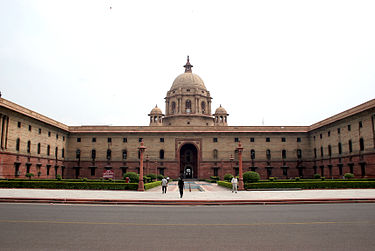
The headquarters of the Indian Armed Forces is in New Delhi, the capital city of India. The President of India serves as the formal Supreme Commander of the Indian Armed Forces, while actual control lies with the executive headed by the Prime Minister of India. The Ministry of Defence (MoD) is the ministry charged with the responsibilities of countering insurgency and ensuring external security of India.
General Manoj Mukund Naravane is the Chief of the Army Staff (COAS), Admiral Karambir Singh is the Chief of the Naval Staff (CNS) and Air Chief Marshal Rakesh Kumar Singh Bhadauria is the Chief of the Air Staff (CAS)
The Indian armed force are split into different groups based on their region of operation. The Indian Army is divided administratively into seven tactical commands, each under the control of different Lieutenant Generals.
The Indian Air Force is divided into five operational and two functional commands. Each command is headed by an air officer commanding-in-chief with the rank of air marshal. The Indian Navy operates three commands. Each command is headed by a flag officer commanding-in-chief with the rank of vice admiral. There are two joint commands whose head can belong to any of the three services. These are the Strategic Forces Command and the Andaman and Nicobar Command. The lack of an overall military commander has helped keep the Indian Armed Forces under civilian control, and has prevented the rise of military dictatorships unlike in neighbouring Pakistan.
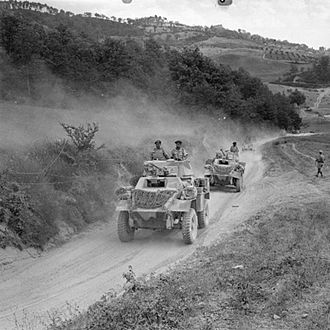
India has one of the longest military histories, dating back several millennia. The first reference to armies is found in the Vedas as well as the epics Ramayana and Mahabaratha. The Royal Indian Navy was first established by the British while much of India was under the control of the East India Company. In 1892, it became a maritime component as the Royal Indian Marine (RIM). During World War I the Indian Army contributed a number of divisions and independent brigades to the European, Mediterranean and Middle Eastern theatres of war. One million Indian troops served overseas; 62,000 died and another 67,000 were wounded. In total, 74,187 Indian soldiers died during the war.
Upon India becoming a sovereign republic on 26 January 1950, some of the last vestiges of British rule - such as rank badges, imperial crowns, British ensigns and "Royal" monikers - were dropped and replaced with the Indian tricolour and the Lion Capital of Asoka.
India fought four major wars with its neighbour Pakistan in 1947, 1965, 1971 and 1999, and with China in 1962. Indian victory over Pakistan in the 1971 war, helped create the free country of Bangladesh. In the late 1970s and early 1980s, Pakistan began organising tourist expeditions to the Siachen Glacier, disputed territory with India. Irked by this development, in April 1984 India initiated the successful Operation Meghdoot during which it gained control over all of the 70 kilometre (41 mile)-long Siachen Glacier, and all of its tributary glaciers, as well as the three main passes of the Saltoro Ridge immediately west of the glacier-Sia La, Bilafond La, and Gyong La.
The vast majority of soldiers in Indian Army are enlisted personnel, called by the Army as Soldier, general duty. These soldiers are recruited at different recruitment rallies across the country. At the rally Army recruiters look at candidates from surrounding districts and examine their fitness for the Army. Candidates for Soldier, general duty must have Class 10 Leaving Certificate and in the range of 17 to 21 years.
At the rally, prospective soldiers are evaluated for Height, Weight, vision and hearing, and physical fitness. Fitness tests include a 1.6 km Run, Pull Ups, jumping a 9 Feet ditch, and doing a zig zag balance test. After recruitment rally, accepted candidates go to Basic Training.
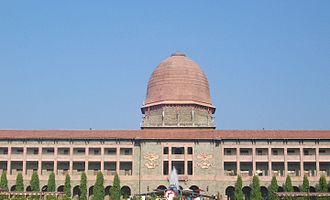
The Indian Armed Forces have set up numerous military academies across India for training personnel. Military schools, Sainik Schools, and the Rashtriya Indian Military College were founded to broaden the recruitment base of the Defence Forces. The three branches of the Indian Armed Forces jointly operate several institutions such as: the National Defence Academy (NDA), the Defence Services Staff College (DSSC), the National Defence College (NDC) and the College of Defence Management (CDM) for training its officers. The Armed Forces Medical College (AFMC) at Pune is responsible for providing the entire pool of medical staff to the Armed Forces by giving them in-service training.
| INDIAN ARMED FORCES | ||
|---|---|---|
| Governing Body | Area | |
| The Indian Army | Ministry of Defence (India) | |
| The Indian Navy | Ministry of Defence (India) | |
| The Indian Air Force | Ministry of Defence (India) | |
| PARAMILITARY FORCES | ||
| Governing Body | Area | |
| Indian Coast Guard | Ministry of Defence (India) | |
| Assam Rifles | Ministry of Home Affairs (India) | |
| Special Frontier Force | Ministry of Home Affairs (India) | |
| CENTRAL ARMED POLICE AND OTHERS | ||
| Governing Body | Area | |
| Border Security Force | Ministry of Home Affairs (India) | Indo-Pak Border, Indo-Bangladesh and others |
| Central Industrial Security Force | Ministry of Home Affairs (India) | Industries, PSUs |
| Central Reserve Police Force | Ministry of Home Affairs (India) | |
| Indo-Tibetan Border Police | Ministry of Home Affairs (India) | India-China Border |
| National Security Guard | Ministry of Home Affairs (India) | |
| Sashastra Seema Bal | Ministry of Home Affairs (India) | Indo-Nepal Border and Indo-Bhutan Border |
| Railway Protection Force | Ministry of Railways (India) | Indian Railways |
| National Disaster Response Force | Ministry of Home Affairs (India) | Area prone to Disaster in India |
| Defence Security Corps | ||
| Special Protection Group | Cabinet Secretariat of India | Cabinet Secretariat of India |
| State Armed Police Forces | State Govt. | Respective States |
| Civil Defence | ||
| Home Guard | ||
The highest wartime gallantry award given by the Military of India is the Param Vir Chakra (PVC), followed by the Maha Vir Chakra (MVC) and the Vir Chakra (VrC). Its peacetime equivalent is the Ashoka Chakra Award. The highest decoration for meritorious service is the Param Vishisht Seva Medal.